The runways that changed flags
How Russia's Africa Corps has settled, one airstrip at a time, into the bases left behind by France and the United States
by Piero Boccardo
In little more than two years, three countries in the Sahel — Mali, Burkina Faso, Niger — expelled France, shut down the UN mission, turned away the United States, and founded a regional military alliance, the AES, which formally left ECOWAS in January 2024. The physical space left empty — bases, runways, hangars, depots — did not stay empty for long. Moving in, with remarkable speed, was Russia’s Africa Corps, the institutional heir to Wagner under GRU direction following Yevgeny Prigozhin’s death in August 2023.
The advance is visible from above. High-resolution commercial satellites, particularly Planet’s SkySat and Pelican fleet, periodically photograph the region’s military installations, and comparing images taken months apart makes the ongoing substitution legible, airstrip by airstrip.
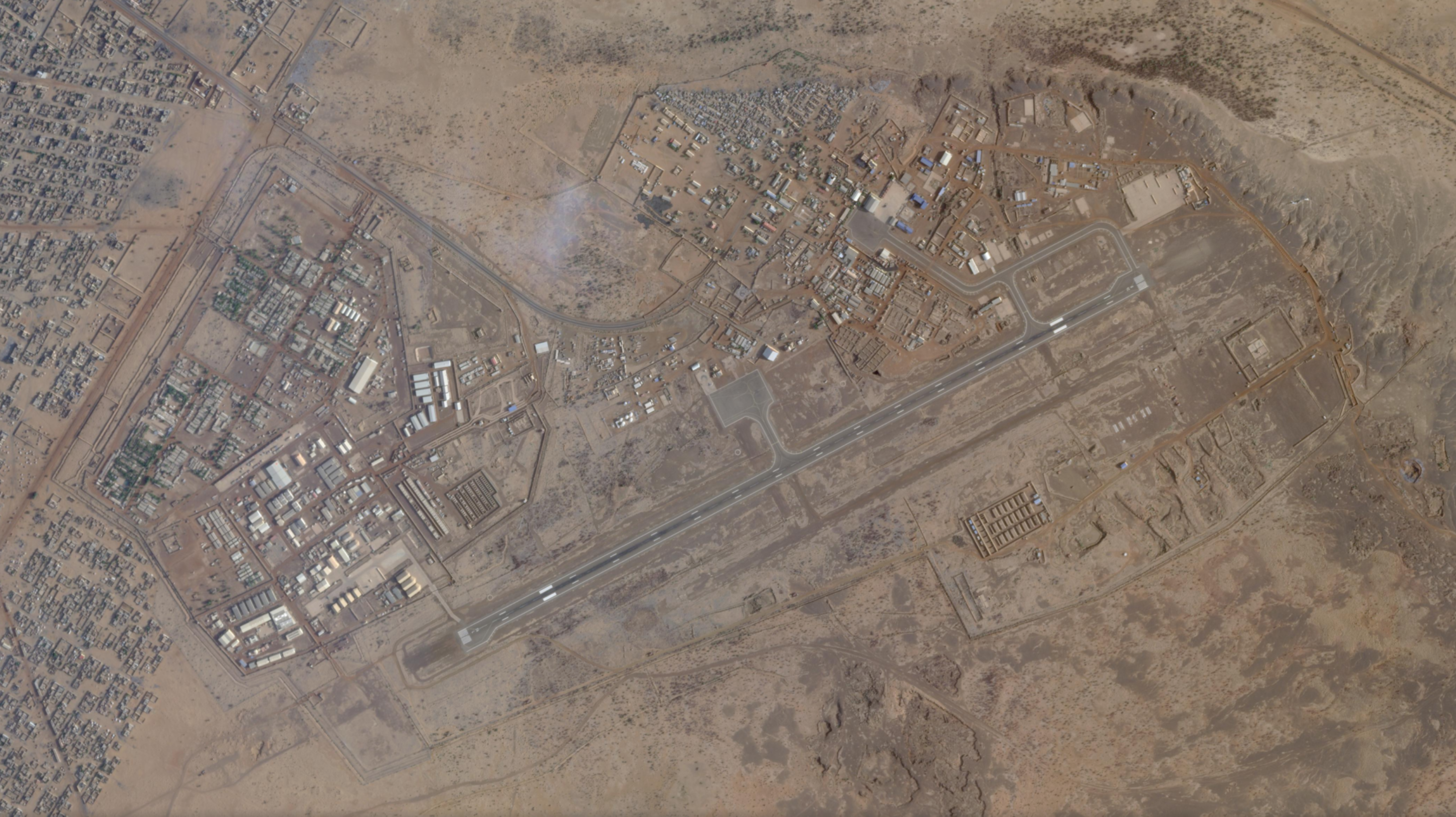
Camp Castor, Gao airport (Mali). It was one of the main bases of the UN MINUSMA mission, managed by German and Dutch contingents until its formal closure at the end of 2023. In the recent image, the fortified perimeter, western and southern logistics areas, two-storey buildings with grey roofs typical of repurposed prefabricated structures, and the runway in full service are all recognisable. — Planet Labs
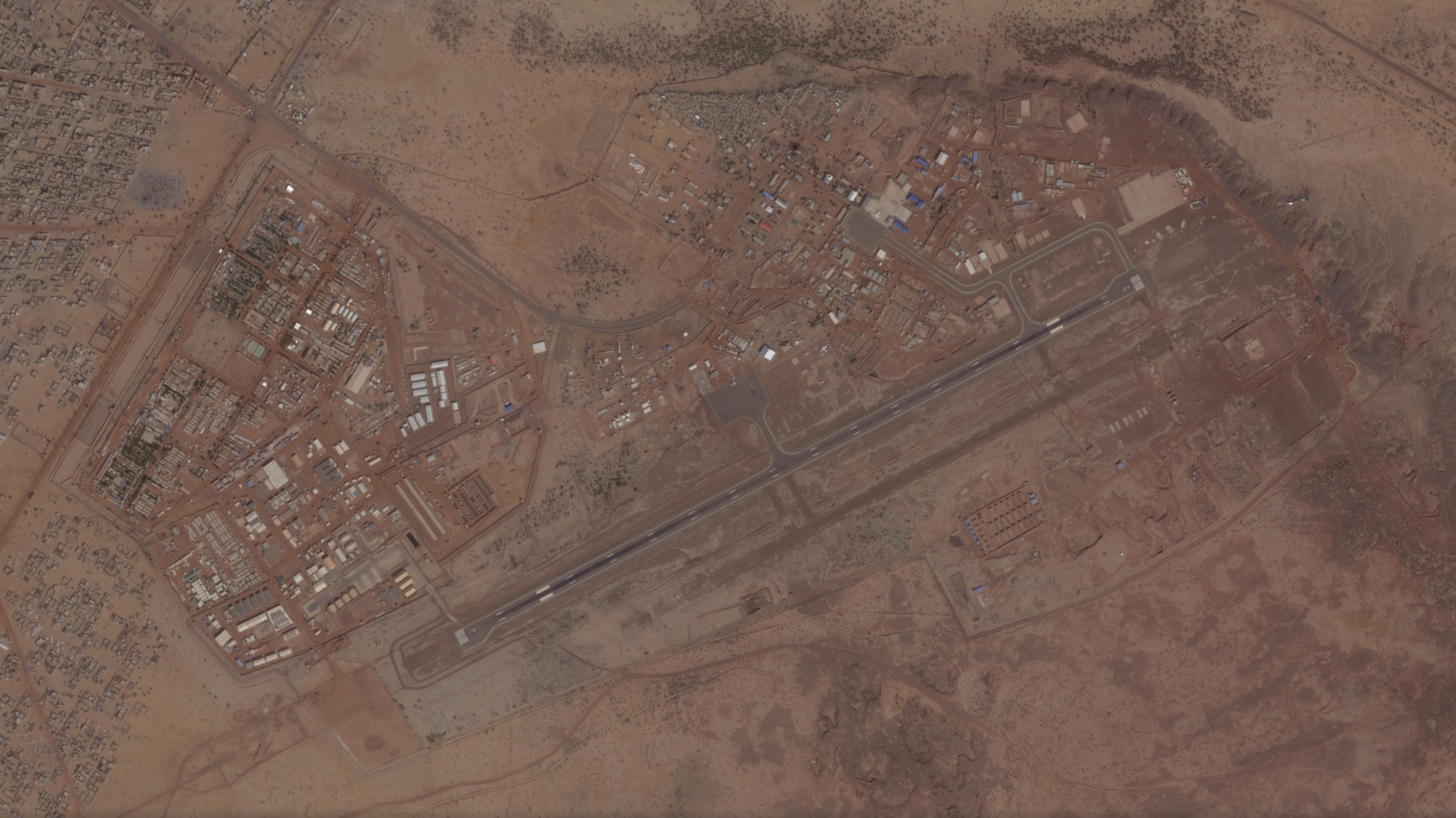
Same site, some months earlier. The most visible difference is the reorganisation of the area: new shelters, moved or added prefabricated structures, modified storage areas. These are the signs of the handover between the outgoing UN contingent and the joint FAMa–Africa Corps presence that took possession of the site at the beginning of 2024. — Planet Labs
Five kilometres north-west of central Gao, Camp Castor is the case study of Sahel OSINT: documented for years by Dutch researchers at PAX and by the Bellingcat collective, it is today one of Russia’s main operational platforms in the country, from which missions depart into the Ménaka and Kidal regions against Tuareg CSP-DPA and JNIM groups.
Further south, in Niamey, the capital of Niger, General Tchiani’s junta expelled French troops in autumn 2023 and American troops between April and July 2024. Air Base 101, next to the civilian airport, has long been the country’s main military air hub.
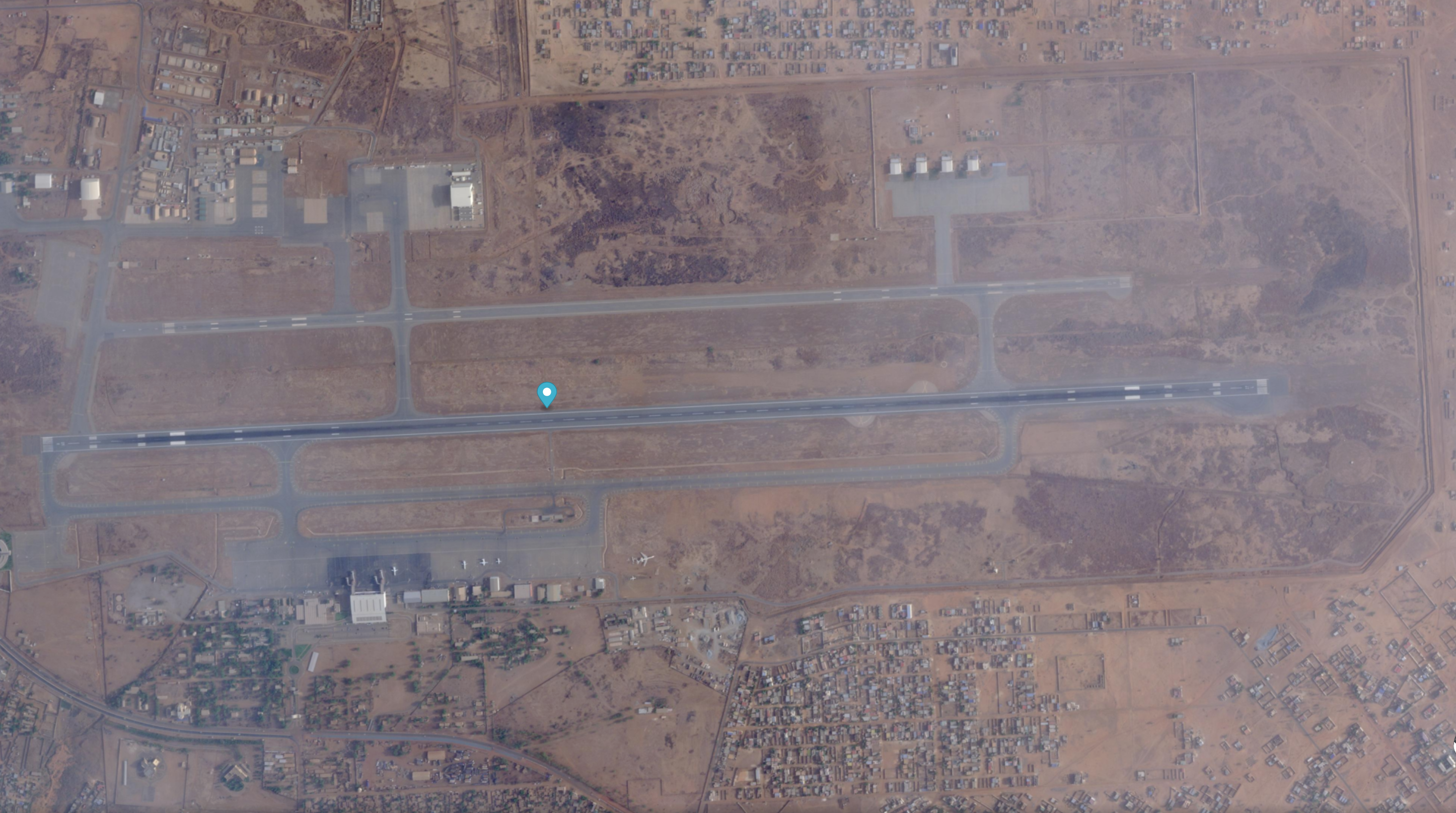
Niamey airport area. In the upper half of the image, the Diori Hamani commercial runway; in the lower right, the Air Base 101 complex, recognisable by the four symmetric square aprons typical of the fighter layout in the region. French Mirage 2000s departed from these pads until 2023, and American Reapers until 2024. — Planet Labs
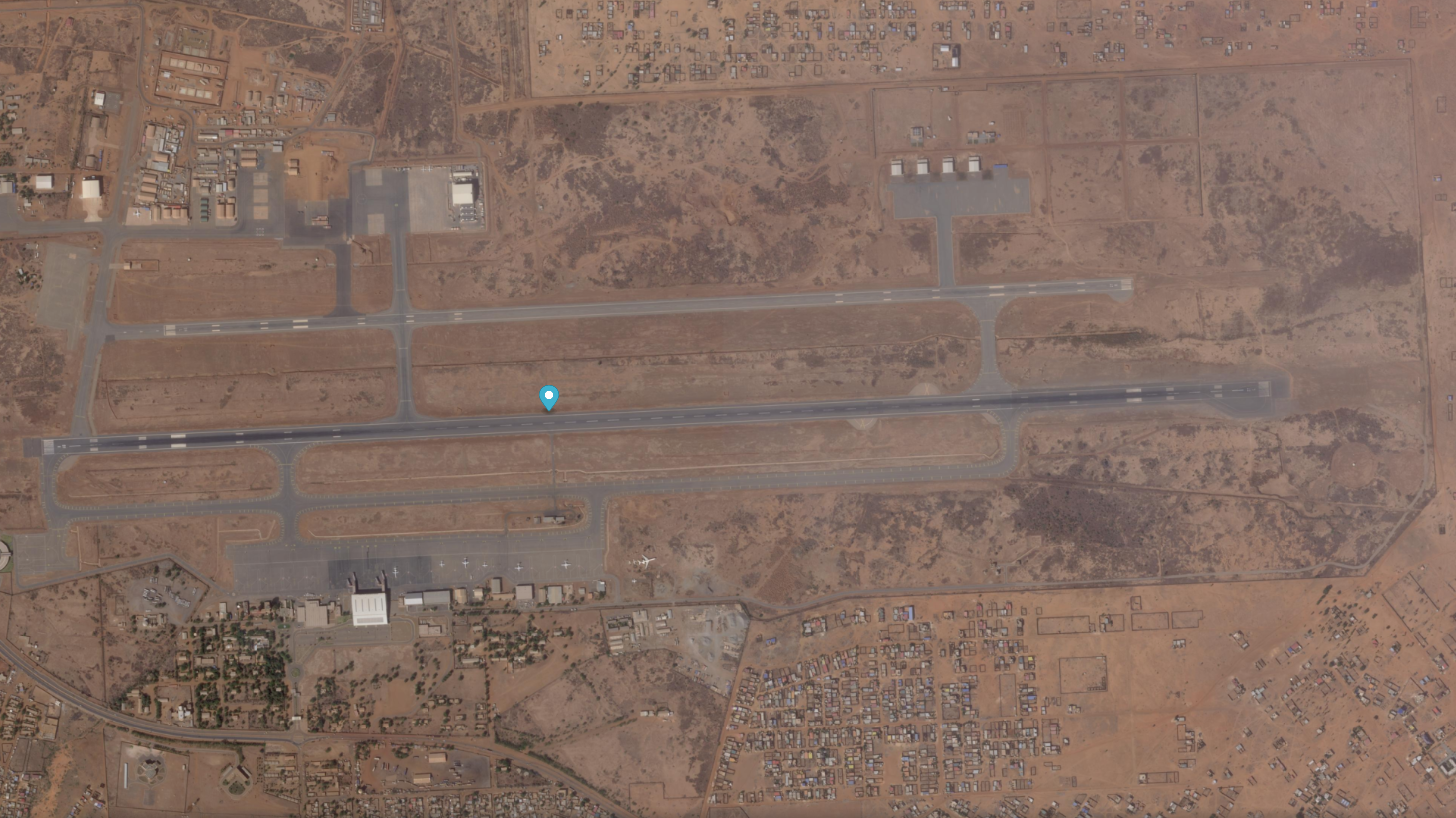
Same area some months earlier. The most relevant visible difference is the reappearance of mobile shelters and new logistics clusters along the edges of the military aprons, consistent with an operational handover. — Planet Labs
The most striking case, however, is five hundred kilometres to the north-east, in the Ténéré desert, where the United States had built from scratch the largest American air base constructed in sub-Saharan Africa in the twenty-first century: Air Base 201 at Agadez, dedicated to Reaper drone surveillance of the entire central Sahel. Estimated cost: over $110 million. Operational life: fewer than eight years. Evacuated between April and July 2024.
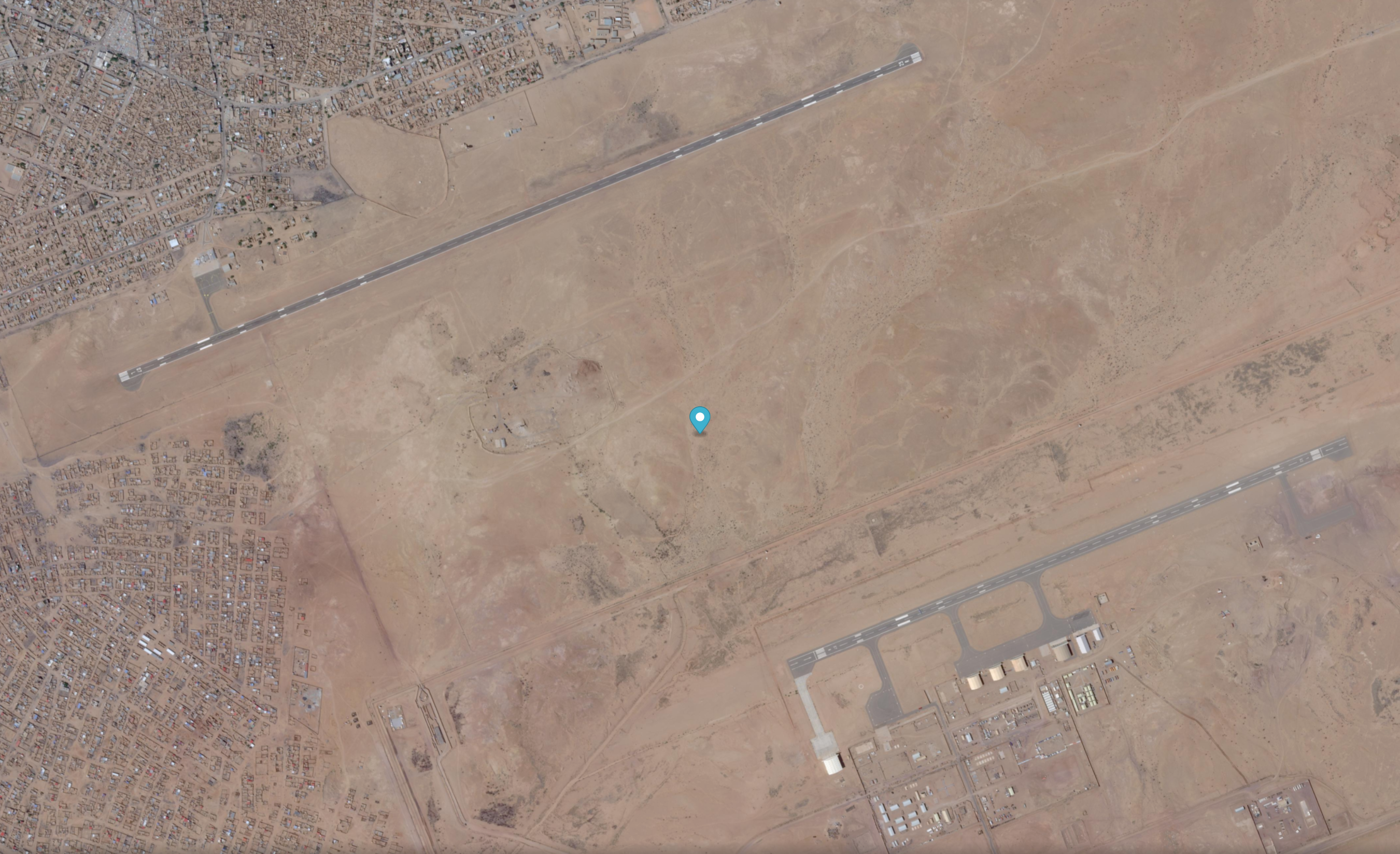
Air Base 201, Agadez (Niger). The main runway, approximately 2,000 metres long, and a parallel secondary runway built for exercises and back-up. Aircraft are visible parked on the southern apron, indicating some form of operational activity. — Planet Labs
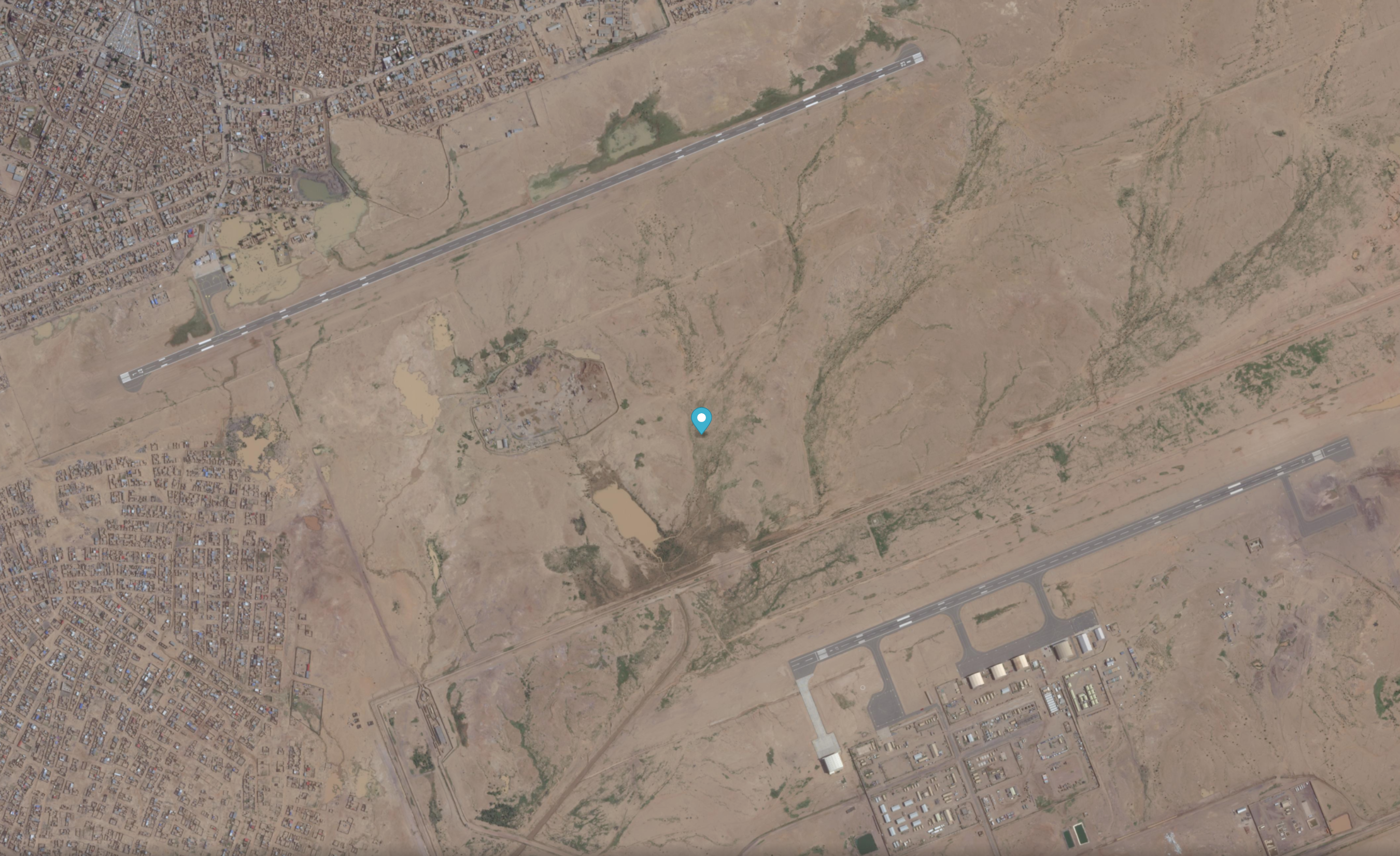
The same AB201 in an earlier scene. The southern apron appears significantly emptier: the difference between a base in full operation and one in a phase of drawdown, or fresh arrival. — Planet Labs
As to what actually flies from Agadez today, analyst hypotheses range from limited tasking by the Force Aérienne du Niger, to the presence of Turkish assets (Bayraktar TB2 and Akinci, already in service in Mali and Burkina Faso), and sporadic Russian presence. This is exactly the kind of question a high-resolution SkySat or Pelican image, repeated on a weekly basis, can answer better than any official communiqué.
The Sahel–CAR axis is the true African headquarters of the Russian system. The Central African Republic has hosted Wagner — today Africa Corps — since 2018, in exchange for gold and diamond mining concessions and the physical protection of Faustin-Archange Touadéra’s regime.
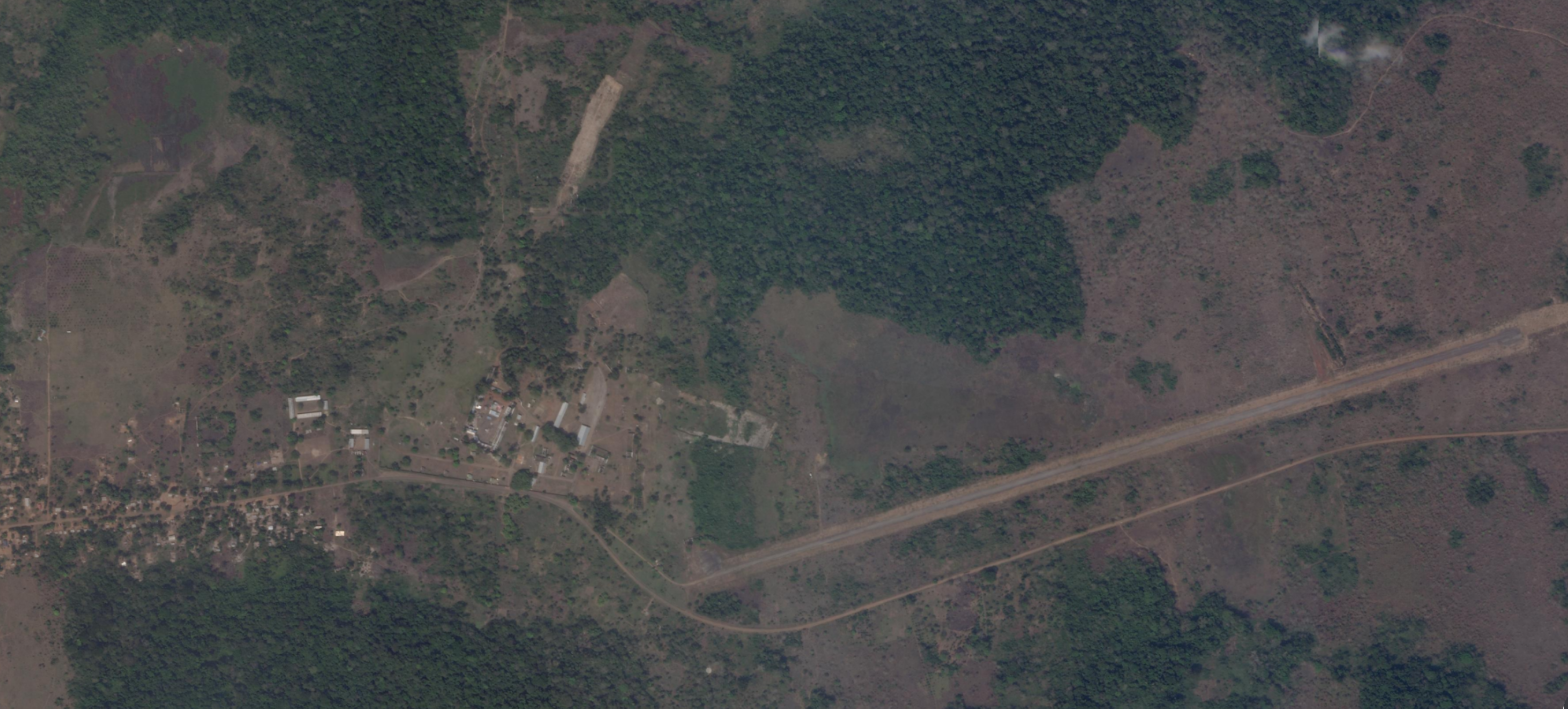
Berengo, seventy kilometres south of Bangui. It was the residence of dictator Bokassa: a palace-city built in the 1970s and then abandoned. Since 2018, it has been a training centre for Wagner, now Africa Corps, personnel. The original buildings are recognisable, and to the right, the runway extended and resurfaced in recent years. — Planet SkySat, acquisition 4 February 2026
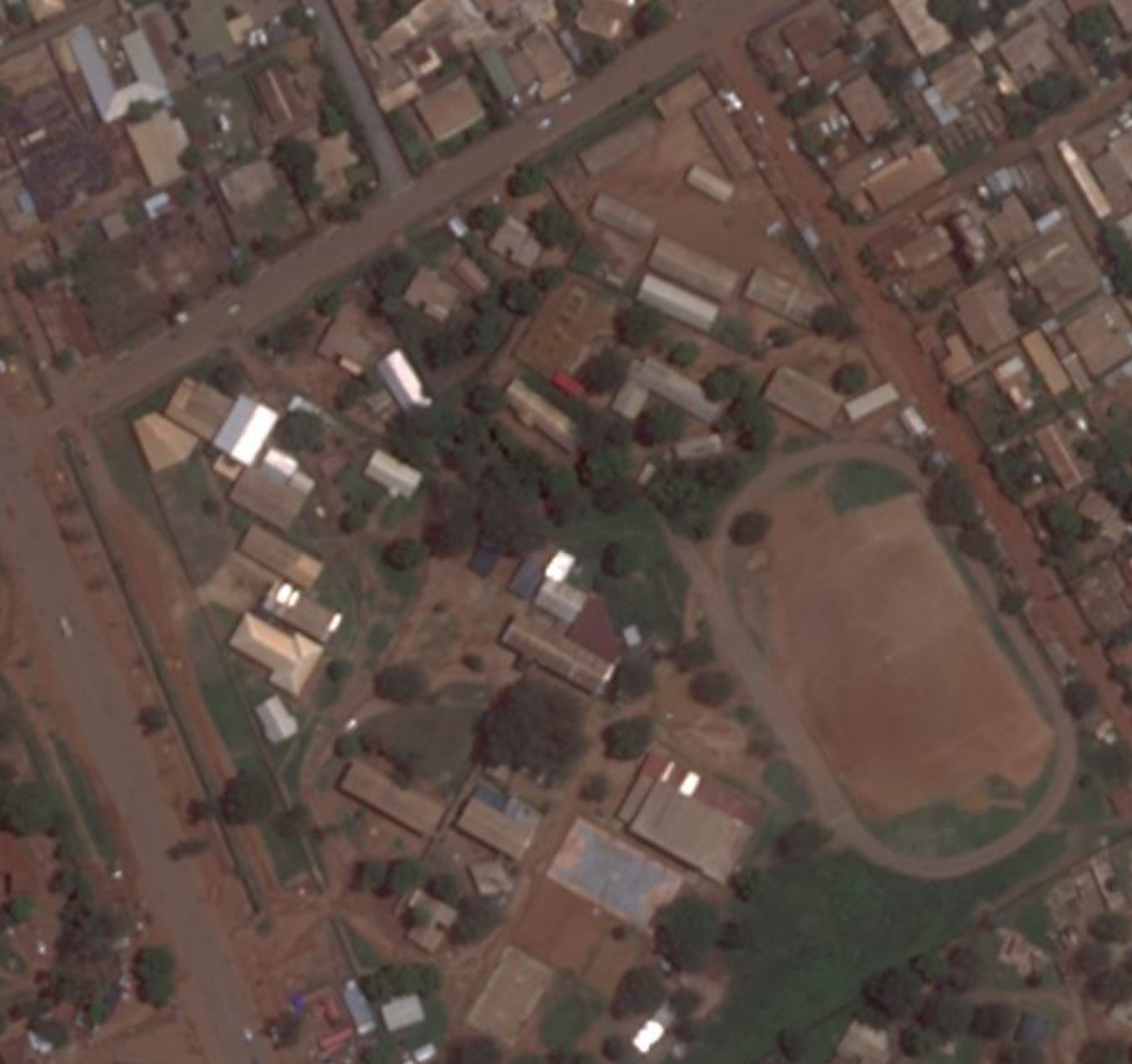
Camp Béal, Bangui. Africa Corps headquarters in central Africa, located in a residential district of the city centre. The main command buildings, the logistics area, and the sports field to the east — repurposed as a training ground — are recognisable. — Planet Labs
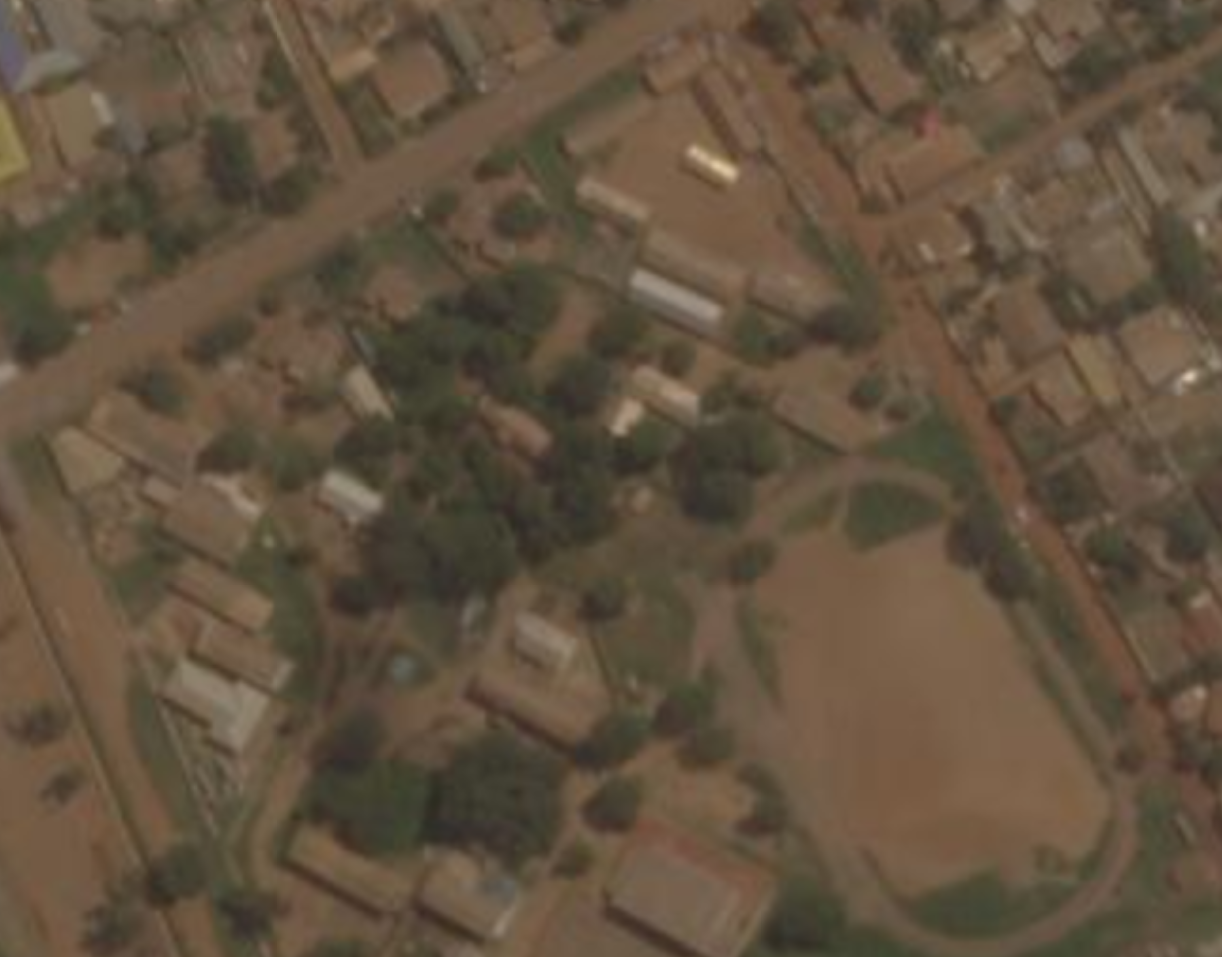
Same site in an earlier acquisition at PlanetScope resolution (3–5 metres), which, though lower in detail, shows how the camp’s perimeter and building density have grown over recent years. — Planet Labs
These nine images map a system. Not a military occupation in the classical sense — Africa Corps is small in numbers, a few thousand men across the entire continent — but a network of essential platforms: an airport at Gao, one at Niamey, one at Agadez, two bases at Bangui and Berengo. From these points move trainers, advisers, intelligence, and occasionally direct operations. Behind them, a payment system in gold and timber mining concessions that financially sustains the deployment.
For those observing from above, the salient fact is simple. After the closure of MINUSMA and the expulsion of France and the United States, no international observers remain on the ground. What we see of these bases comes from orbit, and almost exclusively from commercial constellations. A default transparency choice, made ten years ago by a handful of companies and space agencies, today keeps a window open on the Sahel that without them would already be closed.